
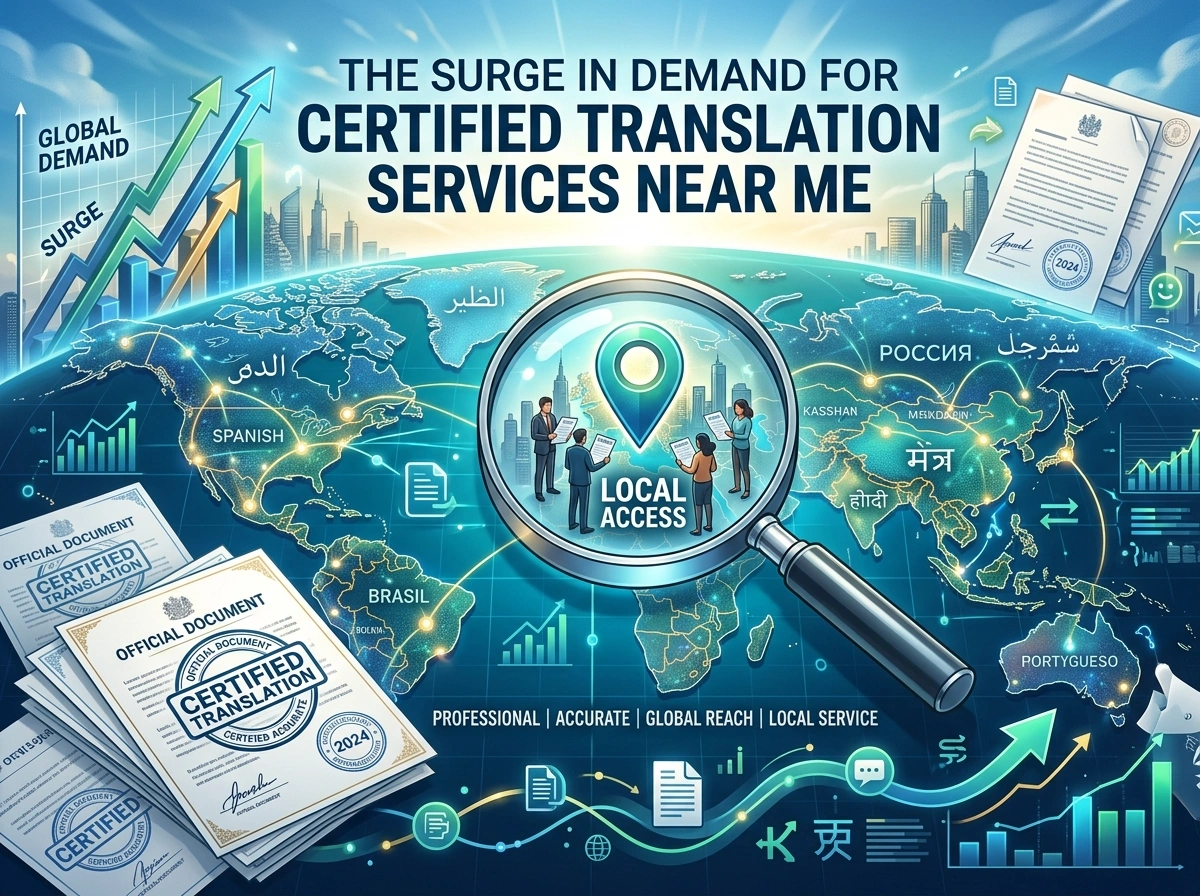
Moving to a new country, expanding a business across borders, or applying to a foreign university all share one common hurdle. You must present your official documents in a language recognized by the local government or institution. As international mobility and global commerce expand, the need for accurate, legally recognized document translation is growing at an unprecedented rate.
A standard translation is rarely enough for official purposes. Government agencies, courts, and educational institutions require proof that a translated document is a precise and complete rendering of the original. This strict requirement ensures that no critical information is lost or altered, protecting both the applicant and the evaluating agency.
Understanding exactly what these services entail, why they are necessary, and how to find a trustworthy provider can save you significant time and frustration. This comprehensive guide explores the factors driving the global need for official document translation, the specific industries that rely on it, and what you should look for when hiring a professional language service.
What Are Certified Translation Services?
A certified translation is a specific type of professional translation required for official use. When a translator or a translation agency completes the work, they attach a signed and dated Certificate of Accuracy. This certificate acts as a formal declaration stating that the individual is competent to translate the specific language pair and that the resulting text is a complete, accurate representation of the original document.
This process differs significantly from standard translation. A bilingual friend or a machine translation tool cannot provide a certified translation. Most government bodies and academic institutions strictly reject translations that lack an official Certificate of Accuracy.
In some instances, institutions require an extra layer of authentication known as a notarized translation. For a notarized translation, a Notary Public witnesses the translator signing the Certificate of Accuracy and then stamps the document. While the notary does not verify the quality of the translation itself, they verify the identity of the person signing the certificate. Understanding these distinctions ensures you submit the correct paperwork the first time, preventing costly delays in your application processes.
Factors Driving the Demand
The translation industry is experiencing massive growth, fueled by several global trends. People and businesses are interacting across borders more than ever before, creating a constant need for official language services.
Rapid Globalization
Businesses are no longer confined by geographic borders. Companies of all sizes regularly hire international talent, establish foreign subsidiaries, and partner with overseas vendors. This cross-border activity generates a massive volume of corporate paperwork. Contracts, financial statements, articles of incorporation, and employee handbooks must be translated and certified to comply with local business regulations. As international trade continues to expand, corporate reliance on professional translation will only increase.
Changing Immigration Patterns
Global migration remains a primary driver of the translation industry. People relocate for work, education, family reunification, and safety. Each relocating individual must navigate complex immigration systems that demand extensive documentation. Applicants must submit birth certificates, marriage licenses, and background checks. If these documents are in a foreign language, immigration authorities mandate certified English translations to process the applications.
Strict Legal and Regulatory Requirements
The legal sector requires absolute precision. A single mistranslated word in a contract or court exhibit can alter the outcome of a legal dispute. Courts and government agencies maintain strict compliance standards to ensure fairness and accuracy. Whenever foreign-language evidence is introduced in a courtroom, a certified translator must verify its contents. This rigid regulatory environment guarantees a steady demand for highly qualified language professionals.
The Importance of Local Accessibility
When individuals need official documents translated, they naturally look for convenient, accessible options. The search query for certified translation services near me is incredibly popular because people want the reassurance of a reliable, responsive provider. They need to know their sensitive documents are in safe hands and that they can meet tight deadlines.
Historically, finding a local service meant driving to a physical office, handing over original documents, and waiting days for a phone call to pick them up. The translation industry has modernized significantly to meet the demand for local accessibility. Today, the concept of a local provider has evolved into secure online portals that offer the same trust and convenience without the need to leave your home.
Modern translation agencies allow you to upload digital copies of your documents directly from your phone or computer. The translated and certified files are then delivered to your email, often within a few business days. This digital-first approach provides nationwide accessibility while maintaining the speed and reliability that people expect from a local business.
Industries That Require Certified Translations
Different sectors have unique requirements and standards for translated documents. Professional translation agencies typically employ specialists who understand the terminology and formatting expected by these specific industries.
Immigration and Government Services
The United States Citizenship and Immigration Services (USCIS) is one of the largest consumers of certified translations. Anyone applying for a green card, naturalization, visa, or asylum must comply with USCIS regulations. Every foreign-language document submitted must include a full English translation and a signed certification from the translator. Common documents include birth certificates, marriage certificates, divorce decrees, and police records. Translations for USCIS must follow specific formatting rules to avoid outright rejection or Requests for Evidence (RFEs), which can delay an application for months.
Legal and Court Systems
Legal proceedings demand meticulous attention to detail. Law firms frequently require certified translations for evidence, witness affidavits, legal contracts, and deposition transcripts. Family courts require translated divorce documents and custody agreements from foreign jurisdictions. Federal and state courts only accept translated documents accompanied by a sworn or certified statement of accuracy. Trustworthy translation providers often offer audio transcription and translation for recorded evidence, ensuring every spoken word is captured accurately for the court record.
Medical and Healthcare
Patient safety relies on accurate medical records. When patients seek treatment in a new country, doctors need to understand their complete medical history. Certified translations of patient records, vaccination history, surgical reports, and prescription details ensure continuity of care. Furthermore, medical translation requires strict adherence to privacy laws. Providers must maintain HIPAA compliance to protect sensitive patient information during the translation process.
Academic Institutions
Universities and college admission boards receive applications from students all over the world. To evaluate an international student’s academic background, admissions offices require certified translations of high school transcripts, university diplomas, and letters of recommendation. Credential evaluation agencies, which convert foreign grades into the U.S. GPA system, also mandate certified translations before they begin their review.
How to Choose a Reliable Service Provider
Selecting the right translation company is a critical decision. Submitting a poorly translated or improperly certified document can result in denied applications and missed deadlines. Keep the following criteria in mind when evaluating potential providers.
Acceptance Guarantees
The most crucial factor is whether the relevant authority will accept the translation. Look for companies that explicitly state their translations are accepted by USCIS, federal courts, and major universities. Experienced providers understand the exact formatting and certification language these institutions require.
Transparent Pricing
Document translation should not involve hidden fees. Reliable agencies offer simple, transparent pricing structures, such as a flat rate per page. They provide instant, free quotes so you know exactly what the service will cost before you commit. Avoid providers that charge unpredictable hourly rates or add unexpected fees for standard certification.
Professional Credentials
Reputable translation companies maintain memberships in recognized industry organizations. Look for agencies that are corporate members of the American Translators Association (ATA). Membership in professional bodies demonstrates a commitment to high ethical standards and translation quality.
Turnaround Times
Official paperwork usually comes with strict deadlines. You need a provider that can deliver accurate results quickly. Standard turnaround times should be between one and three business days. If you face an urgent deadline, ensure the company offers expedited processing or same-day delivery options.
The Future of the Translation Industry
Technology continues to reshape how language services are delivered. Artificial intelligence and neural machine translation are becoming increasingly sophisticated, helping human translators work faster and more efficiently. These tools can quickly generate rough drafts and identify complex terminology.
However, the core of certified translation remains distinctly human. Official institutions will not accept a document translated solely by a machine. AI lacks the cultural nuance, legal understanding, and accountability required to certify a document’s accuracy. The future of the industry lies in collaboration. Translators will use advanced technology to streamline their workflow, but the final review, formatting, and certification will always require the careful eye of a professional human linguist.
Securing Your Official Documents
The demand for accurate, legally recognized translation is higher than ever, driven by global connectivity and strict institutional requirements. Submitting your paperwork to immigration authorities, courts, or universities requires precision, speed, and complete compliance with local regulations.
Choosing the right translation partner takes the stress out of managing international paperwork. By prioritizing transparent pricing, professional credentials, and guaranteed acceptance, you can move forward with confidence. If you need official documents translated, gather your files and request a free quote from a certified professional today to keep your application process moving smoothly.
