
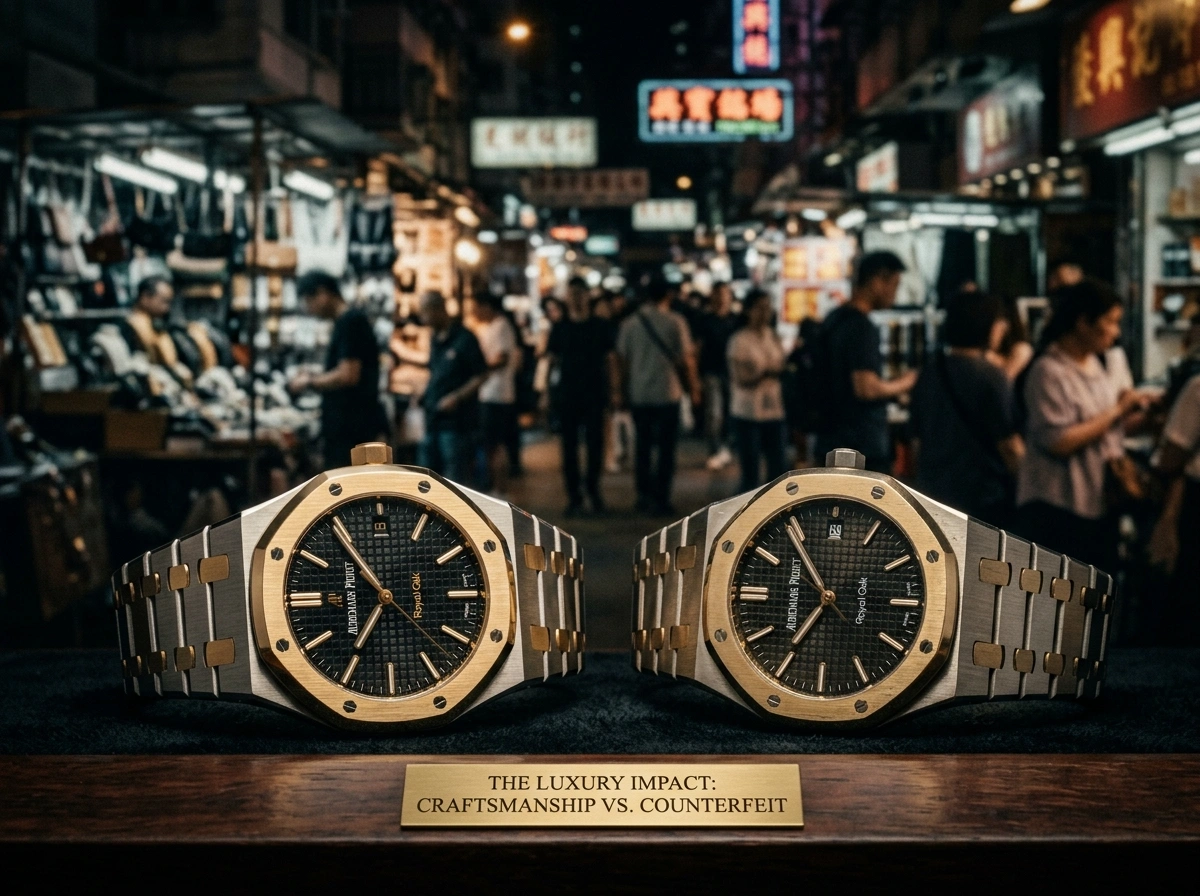
A fine watch is more than a timekeeping device. It signals heritage, craftsmanship, and status, and people pay premium prices for that promise. Counterfeit watches threaten every part of this equation. From small workshop forgeries to sophisticated fakes that fool casual buyers, these products quietly chip away at the foundations of the luxury watch market. The damage spreads far beyond a single lost sale. It touches brand value, consumer confidence, legal systems, retail partners, and the wider perception of luxury itself.
Below, we break down the most significant ways counterfeit watches affect the luxury sector and why brands treat this issue as a serious business priority.
The Direct Economic Hit to Luxury Brands
The most obvious impact is financial. Every counterfeit sold represents a potential genuine sale that never happened. While not every buyer of a fake would have purchased the authentic version, a meaningful share would have, especially as fakes grow more convincing.
The losses add up across several channels:
- Lost revenue from displaced sales of authentic timepieces.
- Increased spending on anti-counterfeiting technology, legal action, and monitoring.
- Reduced pricing power when fakes flood the market and create the impression that a brand is “everywhere.”
Luxury watchmakers invest heavily in scarcity. When counterfeit versions circulate widely, that carefully managed exclusivity weakens, and the brand must work harder to defend its premium replica rolex
.
Erosion of Brand Equity
Brand equity is the value a name carries beyond the physical product. For luxury watch houses, it represents decades, sometimes centuries, of reputation building. Counterfeits attack this directly.
When low-quality copies bear a respected logo, they associate that name with poor performance, cheap materials, and disappointment. A buyer who unknowingly purchases a fake, or who sees a friend’s fake fall apart, may transfer that frustration to the genuine brand. The emotional connection that justifies a high price point starts to fade.
Over time, this dilutes the meaning of the brand. A logo that once stood for precision and prestige becomes something people see on street corners and online marketplaces. That shift is hard to reverse and expensive to repair.
Damage to Consumer Trust
Trust sits at the heart of every luxury purchase. Customers need to believe that what they buy is authentic, well-made, and worth the investment. Counterfeits introduce doubt into that relationship.
As fakes improve, even informed buyers grow cautious. They may hesitate before purchasing from unfamiliar sellers or question the authenticity of pre-owned pieces. This uncertainty can slow purchasing decisions and push buyers toward extra verification steps.
For brands, rebuilding trust requires constant effort. They must educate customers, offer authentication services, and reassure buyers at every stage. When trust erodes, the entire buying experience becomes more friction-filled for everyone.
Legal and Compliance Challenges
Fighting counterfeits is a complex, ongoing legal battle. Luxury brands dedicate substantial resources to protecting their intellectual property across multiple jurisdictions, each with its own laws and enforcement standards.
Common challenges include:
- Cross-border enforcement, since counterfeit operations often span several countries.
- Online marketplace monitoring, where fakes appear and disappear rapidly.
- Trademark and design protection, which requires continuous registration and defense.
Brands must also manage compliance obligations tied to supply chains, anti-money-laundering rules, and customs cooperation. These efforts demand specialized legal teams and significant budgets, pulling resources away from product development and customer experience.
Pressure on Authorized Retailers
Authorized dealers and boutiques feel the strain too. These partners invest in showrooms, trained staff, and service capabilities to deliver the full luxury experience. Counterfeits undercut their value in several ways.
When customers can buy convincing fakes for a fraction of the price, authorized retailers face questions about why genuine pieces cost so much more. Salespeople spend time defending authenticity rather than highlighting craftsmanship. Some shoppers even bring in fakes for repair, creating awkward situations and added costs.
Retailers also bear reputational risk. If a fake somehow enters their inventory through gray-market channels, the consequences for their standing with the brand can be severe. This pressure makes the retail relationship more delicate and demands tighter controls throughout the network.
Threats to Craftsmanship and Innovation
Luxury watchmaking rests on skilled craftsmanship and continuous innovation. Master watchmakers spend years perfecting techniques, and brands invest heavily in research, new movements, and materials. Counterfeiting discourages this investment.
When copies appear quickly after a new model launches, brands see less return on their innovation spending. Why pour millions into a groundbreaking complication if a fake version reaches the market within months? While most companies continue innovating regardless, the constant theft of design and engineering work creates real frustration and financial drag.
There is also a cultural cost. Counterfeits ignore the human skill behind genuine pieces. They reduce artistry to a logo and a shape, stripping away the very qualities that make fine watchmaking meaningful.
Distortion of the Secondary Market
The pre-owned and collector market has become a major part of the luxury watch world. Buyers trade vintage and rare pieces, and prices for sought-after models can climb significantly. Counterfeits inject risk and confusion into this space.
High-quality fakes, sometimes built with genuine-looking components, make authentication harder. Buyers and sellers must rely on experts, paperwork, and verification tools to confirm legitimacy. This added complexity raises transaction costs and can scare off newcomers.
When confidence in authenticity drops, the entire secondary market suffers. Sellers may struggle to command fair prices, and buyers may avoid certain channels altogether. A market built on trust and provenance cannot function smoothly when fakes blur the lines.
Reputational Risks for the Wider Luxury Sector
Counterfeit watches do not damage individual brands alone. They cast a shadow over the entire luxury category. When fakes become common, they normalize the idea that luxury is about appearance rather than substance.
This shift affects how people view luxury goods generally. It can fuel cynicism, suggesting that prestige products are overpriced status symbols anyone can imitate. For an industry that depends on aspiration and authenticity, that perception is dangerous.
The sector also faces association with illicit activity. Counterfeiting often links to organized crime and unethical labor practices. When consumers connect luxury logos with these realities, even unfairly, the reputational stain spreads across honest brands and reputable retailers alike.
Conclusion
Counterfeit watches create damage that reaches well beyond lost sales. They erode hard-earned brand equity, weaken consumer trust, and burden brands with heavy legal and compliance costs. Authorized retailers face added pressure, innovation gets discouraged, and the secondary market grows more difficult to navigate. The wider luxury sector absorbs reputational risk that can take years to undo.
For brands, retailers, and marketers, understanding these impacts is essential. Protecting authenticity is not just about defending profits. It safeguards craftsmanship, customer relationships, and the meaning of luxury itself. As fakes grow more sophisticated, the industry’s commitment to transparency, education, and strong protection will shape its ability to preserve the value that genuine timepieces represent.
