
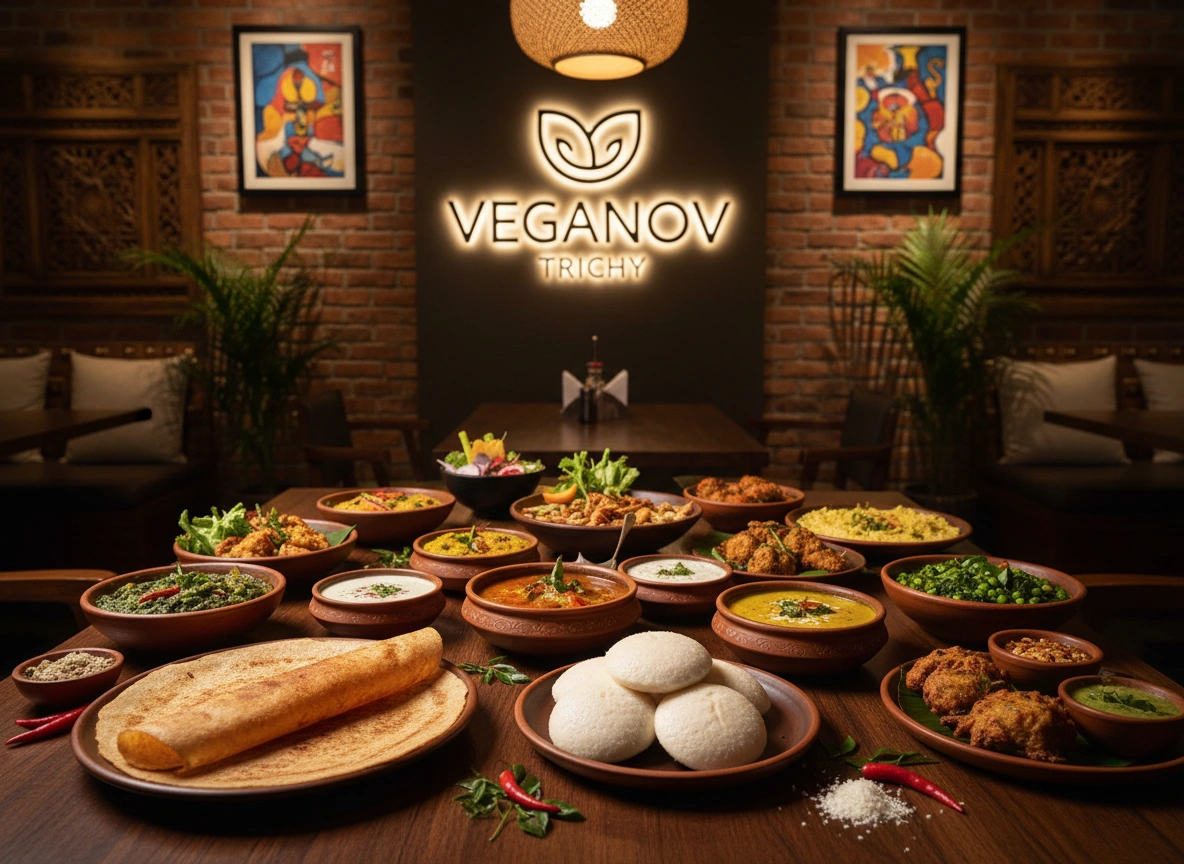
Walk through the bustling streets of Chennai, Bengaluru, or Tiruchirappalli today, and you will notice something different. Amidst the legendary filter coffee houses and traditional thali restaurants, a new kind of signage is popping up with increasing frequency. Green leaves, plant-based promises, and the word “Vegan” are no longer anomalies. They are becoming part of the mainstream culinary fabric.
South India has always been a haven for vegetarians, but the leap to veganism—eschewing dairy, honey, and all animal by-products—is a relatively recent phenomenon. It represents a significant cultural shift in a region where ghee, curd, and milk are almost sacred dietary staples.
This article explores the burgeoning vegan movement in South India, the cultural currents driving this change, and how pioneers like Veganov in Trichy are not just riding the wave but actively shaping the future of ethical dining.
Why Veganism is Taking Root in the South
The concept of plant-based eating isn’t entirely foreign to Indian culture. However, the modern vegan movement distinguishes itself by its ethical, environmental, and health-driven motivations, rather than purely religious ones.
The Health Consciousness Wave
The post-pandemic world has seen a dramatic spike in health awareness. With lifestyle diseases like diabetes and hypertension on the rise, many South Indians are re-evaluating their relationship with food. The high consumption of dairy fats is increasingly being scrutinized. People are looking for lighter, cleaner alternatives that don’t compromise on the robust flavors they grew up with.
Ethical and Environmental Concerns
Younger generations are particularly tuned into the global conversation about climate change. The carbon footprint of the dairy industry is a major concern for eco-conscious millennials and Gen Z diners. For them, choosing a plant-based meal is a form of activism. It is a daily vote for a sustainable planet.
The “Incidental Vegan”
Interestingly, South Indian cuisine is already arguably one of the most vegan-friendly cuisines in the world by default. Idli, dosa, sambar, rasam, and a multitude of poriyals (vegetable stir-fries) are naturally vegan if prepared without ghee. This existing foundation makes the transition easier for locals compared to other global cuisines that rely heavily on meats and cheeses.
Trichy: An Unlikely Hub for Culinary Innovation
Tiruchirappalli, or Trichy, is often viewed through the lens of its rich history and temples. It is a city steeped in tradition. Yet, it is precisely in such traditional strongholds that innovation can make the most profound impact.
While metropolitan cities like Bengaluru and Chennai were the first to adopt vegan cafes, Tier-2 cities like Trichy are now catching up rapidly. The local population is becoming more cosmopolitan, fueled by a growing student population and returning expatriates who have experienced diverse food cultures abroad.
In this evolving landscape, Veganov has emerged as a trailblazer. It stands as a testament to the fact that vegan food can be accessible, delicious, and commercially viable even in cities deeply rooted in traditional dairy consumption.
Spotlight on Veganov: Redefining Plant-Based Dining
Veganov is not just a restaurant; it is a movement within four walls. Located in the heart of Trichy, it has challenged the misconception that vegan food is bland, expensive, or “foreign.”
Breaking the “Dairy is Essential” Myth
The biggest hurdle for any vegan establishment in South India is the dairy question. How do you make a satisfying meal without curd rice or ghee roast? Veganov answers this with creativity. They utilize plant-based alternatives like coconut milk, almond milk, and cashew creams to replicate the richness locals crave.
Their menu is designed to bridge the gap between familiarity and novelty. You might find a classic pasta dish rendered creamy with a cashew-based sauce, or a traditional dessert reimagined without a drop of milk. By proving that taste is not compromised, they win over skeptics who walk in expecting “diet food” and leave feeling indulged.
Innovation on the Plate
What sets Veganov apart is its commitment to culinary innovation. They don’t just remove meat and dairy; they replace them with high-quality, nutrient-dense ingredients.
- Mock Meats: For those transitioning from a non-vegetarian diet, texture is key. Veganov employs soy and wheat proteins to create “meaty” textures in burgers and wraps, offering the satisfaction of a heavy meal without the cholesterol.
- Global Fusion: The menu often features a mix of Continental, Italian, and Asian influences. This variety appeals to the younger demographic in Trichy who are eager to explore global flavors but want to align their consumption with their ethical values.
- Health-First Approach: Beyond just being vegan, the focus is on wholesome ingredients. You won’t find excessive processed foods. The emphasis is on fresh produce, whole grains, and house-made sauces.
Community Impact
Veganov serves as a community hub. It is a safe space for those with lactose intolerance—a surprisingly common but under-diagnosed issue in India. It is also a gathering spot for fitness enthusiasts and eco-conscious youth. By hosting events or simply providing literature on plant-based living, they educate their patrons. They are normalizing the word “vegan” in a city where it was virtually unknown a decade ago.
The Economic Viability of Vegan Business in Tier-2 Cities
The success of Veganov highlights an important economic trend. There is a deeply held belief that niche dietary businesses can only survive in top-tier metros. Veganov proves this wrong.
Lower Overheads, Loyal Customers
Operating in a city like Trichy offers advantages like lower rental costs and operational overheads compared to Chennai or Bangalore. Furthermore, in a smaller market, a high-quality establishment can quickly build a fiercely loyal customer base. Word-of-mouth marketing is powerful in Trichy. When a restaurant delivers consistent quality, the community rallies behind it.
Supply Chain Localization
Another factor in the rise of restaurants like Veganov is the localization of supply chains. Ingredients that were once exotic and expensive—like broccoli, zucchini, or plant-based milks—are now more accessible in local markets or can be sourced directly from regional farmers. This reduces costs and makes vegan dining more affordable for the average consumer.
Challenges and the Road Ahead
Despite the optimism, the journey is not without challenges.
- Price Perception: There remains a stigma that vegan food is elitist and expensive. Restaurants must constantly work to keep price points accessible while using quality ingredients.
- Cultural Resistance: Food is emotional. Asking someone to give up their grandmother’s ghee-laden recipes can feel like an attack on their heritage. The key, as demonstrated by successful brands, is not to attack tradition but to offer a parallel, compassionate alternative.
- Ingredient Awareness: Educating the public on why they should choose a mushroom burger over a chicken one requires patience and consistent messaging.
Conclusion
The rise of vegan dining in South India is not a fleeting trend. It is a reflection of a society that is evolving, becoming more health-conscious, and growing more aware of its environmental impact.
Establishments like Veganov in Trichy are the torchbearers of this movement. They are doing the hard work of changing mindsets, one meal at a time. They show us that we don’t need to sacrifice flavor for ethics, nor tradition for health. As more people in South India embrace this lifestyle, we can expect to see a culinary renaissance that honors the region’s plant-based roots while looking forward to a sustainable future.
If you find yourself in Trichy, a visit to Veganov isn’t just about grabbing a bite to eat. It is about experiencing the future of South Indian dining—compassionate, innovative, and incredibly delicious.
Actionable Next Steps
- Visit Veganov: If you are in Trichy, support local innovation by dining at Veganov.
- Try a “Vegan Day”: Challenge yourself to eat strictly plant-based for one day a week to explore new flavors.
- Educate Yourself: Watch documentaries like The Game Changers or Cowspiracy to understand the global impact of food choices.
- Explore Local Options: Look for vegan options in your local restaurants; you might be surprised by how many accidental vegan dishes you already love.
Please visit website for more info
