
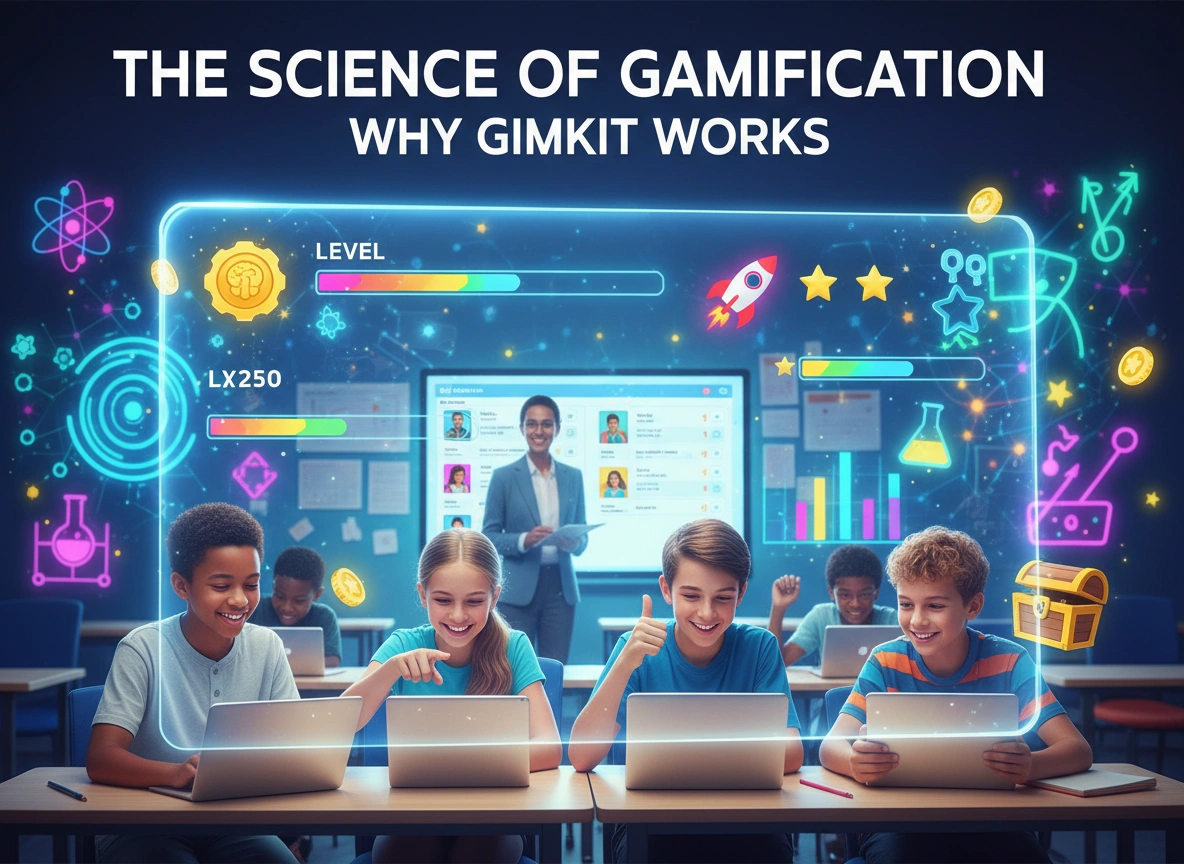
Learning doesn’t have to be a chore. When students are engaged, motivated, and even a little competitive, their capacity to absorb and retain information skyrockets. This is the core principle behind gamification, a powerful strategy transforming classrooms worldwide. By applying game-like elements to educational content, platforms like Gimkit are tapping into the fundamental psychology of human motivation, making learning not just effective, but genuinely fun.
This article explores the science that makes gamification a successful teaching tool. We will break down the psychological drivers behind game mechanics and examine how Gimkit masterfully integrates these principles. You will learn how rewards, competition, and strategic engagement can turn a simple quiz into a memorable educational experience.
What is Gamification and Why Does it Matter?
Gamification is the strategic use of game design elements and principles in non-game contexts. It’s not about turning a lesson into a video game, but rather about borrowing the features that make games so compelling—points, badges, leaderboards, challenges—and applying them to learning objectives. The goal is to increase engagement, influence behavior, and foster a sense of accomplishment.
The importance of this approach in education cannot be overstated. Traditional teaching methods sometimes struggle to hold the attention of students accustomed to the fast-paced, interactive nature of digital media. Gamification bridges this gap by aligning educational tasks with the brain’s natural reward system, making students active participants rather than passive observers.
When students are engaged, they learn more deeply. Gamified learning encourages persistence, problem-solving, and critical thinking. It creates a safe environment for failure, where trying again is part of the game, not a mark of inadequacy. This shift in perspective helps build resilience and a positive attitude toward challenges.
The Psychology of Engagement: Tapping into the Brain’s Reward System
At its core, gamification works because it aligns with fundamental human psychology. It activates the brain’s reward pathways, particularly those involving dopamine, a neurotransmitter associated with pleasure, motivation, and memory.
The Power of Dopamine
When you achieve a goal, overcome a challenge, or receive an unexpected reward, your brain releases a small amount of dopamine. This chemical signal creates a feeling of satisfaction and reinforces the behavior that led to it, making you want to repeat it. Games are masterfully designed to trigger these dopamine loops.
Gimkit leverages this principle effectively. Each correct answer earns students in-game currency. This immediate, tangible reward provides a small dopamine hit, reinforcing the act of answering correctly. The ability to use this currency to purchase upgrades and power-ups creates a continuous cycle of effort and reward, keeping students motivated to keep playing—and learning.
Intrinsic vs. Extrinsic Motivation
Motivation can be categorized into two types:
- Extrinsic Motivation: This comes from external rewards, such as points, grades, or prizes. It is a powerful driver for completing tasks.
- Intrinsic Motivation: This comes from within. It is the desire to do something because it is inherently interesting, enjoyable, or fulfilling.
Effective gamification balances both. Extrinsic motivators, like the points and cash in Gimkit, get students started and keep them engaged in the short term. However, the ultimate goal is to foster intrinsic motivation. Gimkit achieves this through elements of autonomy, mastery, and purpose. Students have the autonomy to choose how they spend their in-game cash. They develop a sense of mastery as they answer more questions correctly and see their scores climb. The purpose is clear: to win the game by demonstrating knowledge.
How Gimkit Implements Key Gamification Principles
Gimkit is a prime example of gamification done right. It’s more than just a digital quiz; it’s an economic game built around knowledge. Let’s break down the specific features and the scientific principles that make them so effective.
1. Rewards and Progression
In Gimkit, students don’t just get a point for a correct answer. They earn virtual currency. This simple shift from abstract points to a tangible “resource” adds a layer of strategy and excitement. The immediate feedback of earning cash reinforces learning and provides a clear measure of progress.
This system is designed to create a compelling progression loop. Students answer questions, earn cash, and use that cash to buy upgrades. These upgrades, such as earning more money per question or multiplying their streak bonuses, make subsequent efforts more rewarding. This escalating sense of power and achievement keeps students hooked, encouraging them to persist through more challenging questions.
2. Healthy Competition and Leaderboards
Competition is a powerful motivator. Leaderboards provide real-time feedback on a student’s performance relative to their peers. This social comparison can spur students to try harder and stay focused. Gimkit’s live leaderboard is a central feature, showing who is in the lead and creating a dynamic, race-like atmosphere.
However, unchecked competition can discourage students who fall behind. Gimkit addresses this with various game modes and mechanics. Some modes are team-based, fostering collaboration over individual rivalry. Others, like “The Floor is Lava,” create a common enemy, uniting the class toward a shared goal. This flexibility allows educators to tailor the competitive element to their classroom’s specific needs, ensuring the experience remains positive and inclusive.
3. Elements of Chance and Surprise
Predictability can lead to boredom. Games often introduce elements of chance to keep things exciting, and Gimkit is no exception. Power-ups offer unexpected advantages (or disadvantages for opponents), adding a layer of unpredictability to the game. A student who is falling behind can suddenly get a boost that catapults them up the leaderboard.
This use of variable rewards is a well-established psychological principle for maintaining engagement. If rewards are predictable, their motivational power diminishes over time. The chance of receiving a powerful, game-changing bonus keeps dopamine levels high and ensures students remain invested until the very end. It introduces hope and excitement, even for those not at the top of the leaderboard.
4. A Safe Space for Failure
One of the most significant advantages of gamification is its ability to reframe failure. In a traditional test, a wrong answer is a penalty. In Gimkit, a wrong answer might mean losing a streak or a small amount of in-game cash, but the game immediately presents another question. The stakes are low, and the opportunity to recover is immediate.
This creates a learning environment where students are not afraid to take risks or guess. The focus shifts from fear of being wrong to the desire to try again. This builds resilience and a growth mindset, where students see challenges as opportunities to learn and improve, not as threats to their academic self-worth.
The Educational Impact: Beyond Engagement
The benefits of a platform like Gimkit extend far beyond simple engagement. By making learning active and enjoyable, it has a measurable impact on educational outcomes.
First, it significantly improves knowledge retention. The process of repeatedly retrieving information to answer questions—a practice known as retrieval practice—is one of the most effective ways to strengthen long-term memory. The fast-paced, repetitive nature of a Gimkit game is essentially a high-intensity workout for the brain’s memory centers.
Second, it accommodates different learning paces. Students who master the material quickly can accelerate their progress in the game through upgrades and streaks. Those who need more time can continue to answer questions at their own pace without feeling left behind. The core activity remains the same for everyone, promoting an inclusive learning environment.
Finally, Gimkit provides educators with valuable, real-time data. Teachers can instantly see which questions students are struggling with, identifying knowledge gaps across the entire class or for individual students. This allows for immediate, targeted intervention, making instruction more efficient and effective.
Conclusion: The Future of Learning is Playful
The success of Gimkit is not an accident; it is a carefully crafted application of the science of human motivation. By integrating principles like immediate rewards, healthy competition, and strategic progression, it transforms review sessions and assessments from tedious obligations into exciting events that students genuinely look forward to.
Gamification taps into our innate love of play, challenge, and achievement. It leverages the brain’s own reward system to make learning more engaging and information more memorable. As educators and edtech enthusiasts continue to seek innovative ways to inspire the next generation, the lessons from platforms like Gimkit are clear: when you make learning a game, everyone wins
