
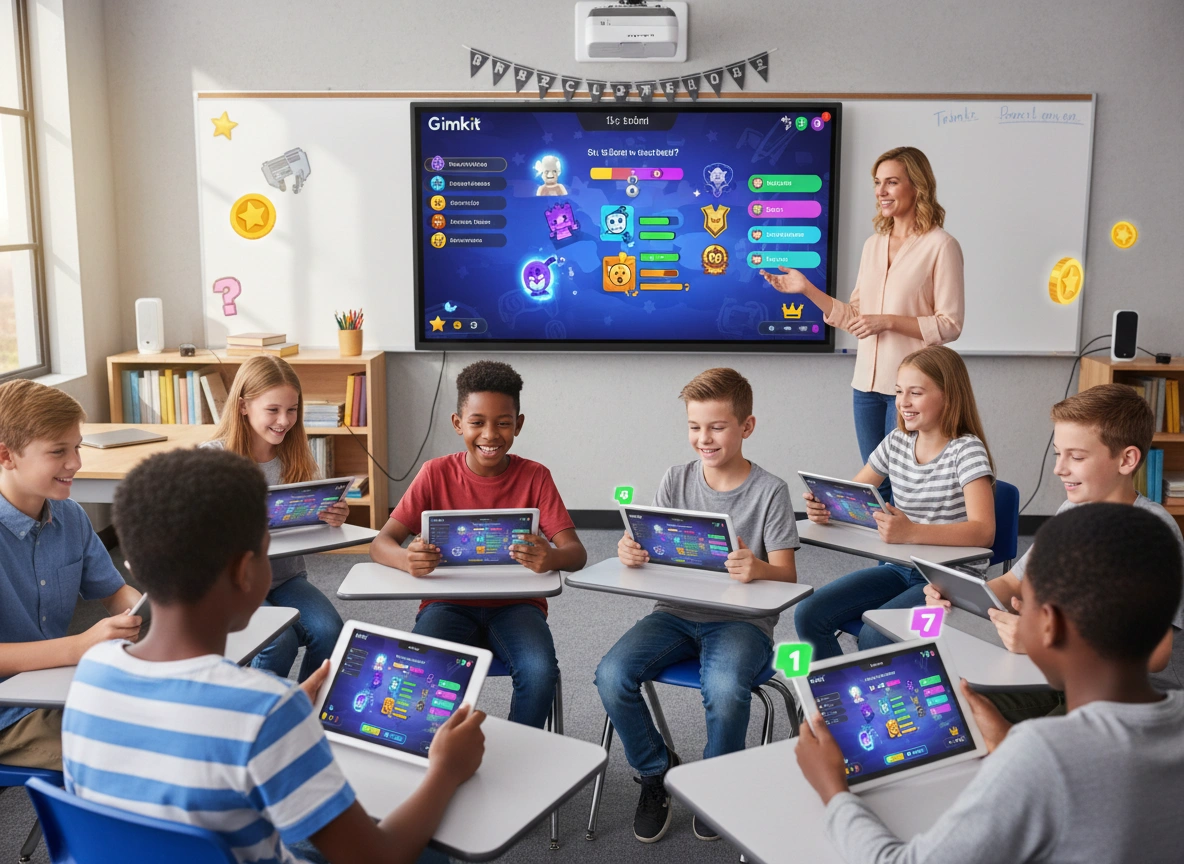
The landscape of educational technology has shifted dramatically in the last decade. Gone are the days when a simple slide deck or a static quiz constituted “digital learning.” Today, tools must be dynamic, interactive, and, crucially, engaging. Among the platforms leading this charge is Gimkit. Created by a high school student who felt classroom games were becoming stale, Gimkit has rapidly evolved from a simple quiz tool into a comprehensive engagement platform that is fundamentally reshaping how students interact with curriculum.
This article explores the mechanics behind Gimkit’s success, its profound impact on student engagement, its adaptability to various learning styles, and its broader role in the modernization of education.
Beyond the Leaderboard: The Mechanics of Motivation
At first glance, Gimkit might resemble other gamified learning platforms like Kahoot! or Quizizz. Students answer questions on their own devices, and teachers receive data on their performance. However, Gimkit introduces a unique economic layer to the gameplay that changes the psychological incentives for students.
In a traditional classroom game, the primary motivator is speed and accuracy to climb a leaderboard. While effective for some, this can discourage students who process information more slowly or who fall behind early. Gimkit disrupts this model by allowing students to earn in-game currency (“cash”) for correct answers. This currency isn’t just a score; it is a resource. Students must make strategic decisions on how to invest their earnings. They can purchase upgrades, such as “Streak Bonuses” to multiply their earnings for consecutive correct answers, or insurance to protect against losses when they answer incorrectly.
This shift from simple recall to resource management transforms the learning experience. It introduces elements of strategy, risk assessment, and long-term planning alongside content mastery. A student who isn’t the fastest reader but employs a smart investment strategy can outperform a peer who relies solely on rapid recall. This leveling of the playing field keeps engagement high throughout the entire session, rather than just the first few minutes.
Innovative Features Driving Engagement
Gimkit’s innovation lies in its variety of game modes. The platform moves beyond the standard multiple-choice format into immersive experiences that borrow heavily from popular video game culture.
The “Among Us” Effect: Trust No One
One of the most popular modes, “Trust No One,” mirrors the social deduction mechanics of the viral game Among Us. Students must answer academic questions to run “investigations” and identify the impostors among them. This integrates social interaction and critical thinking directly with curriculum content. Students aren’t just answering math problems; they are answering math problems to save their crew. The academic content becomes the fuel for the gameplay, making the “work” feel inseparable from the “play.”
Collaborative Modes: The Floor is Lava
Unlike many ed-tech tools that focus on individual achievement, Gimkit emphasizes collaboration. Modes like “The Floor is Lava” require the entire class to work together. Students must answer questions correctly to build structures that keep their team above the rising lava. If one student struggles, others can step in to support the collective goal. This fosters a sense of community and shared responsibility, crucial soft skills that extend well beyond the classroom walls.
KitCollab: Student-Driven Content
Perhaps the most pedagogically significant feature is KitCollab. This mode flips the script by asking students to create the questions. The teacher launches the mode, students submit questions based on the lesson, and the teacher approves or rejects them in real-time. Once the set is built, the class plays the game they just created. This encourages higher-order thinking, as students must understand the material well enough to formulate valid questions and distractors, rather than just recognizing the correct answer.
Supporting Diverse Learning Styles
A major challenge in modern education is differentiation—tailoring instruction to meet individual needs. Gimkit provides a surprising amount of flexibility in this regard, supporting various learning styles more effectively than traditional worksheets or lectures.
Self-Paced Learning
In many game modes, students answer questions at their own pace. The questions cycle through repeatedly until the game ends. This repetition is key for retention. A student who misses a concept the first time will see that question again later in the session. This immediate feedback loop allows for rapid correction and reinforcement without the public shame of raising a hand to say, “I don’t get it.”
Visual and Strategic Learners
For students who struggle with rote memorization, the strategic elements of Gimkit provide an alternative hook. Visual learners benefit from the colorful, intuitive interfaces, while strategic thinkers thrive on the economic aspects of the game. By decoupling “intelligence” from “speed,” Gimkit allows different types of intellect to shine.
Homework and Independent Practice
Gimkit isn’t limited to synchronous classroom play. Teachers can assign “Gimkit Assignments” for homework. These allow students to work through the material independently, providing a low-stakes environment for practice. Because the mechanics remain engaging—earning currency and buying upgrades—students are often more willing to complete these assignments compared to traditional homework.
Data-Driven Instruction
While the front-end experience is all about engagement, the back-end provides robust data for educators. Every session generates a detailed report breaking down student performance. Teachers can see overall class accuracy, identify frequently missed questions, and track individual student progress.
This data is actionable. If a teacher notices that 60% of the class missed a question on a specific historical date, they know immediately that this concept needs reteaching. This allows for “just-in-time” intervention, correcting misconceptions before they become ingrained. The platform essentially acts as a formative assessment tool that students actually enjoy taking.
Case Studies: Gimkit in Action
Across the country, educators are finding creative ways to integrate Gimkit into their pedagogy.
The Spanish Classroom:
A high school Spanish teacher uses Gimkit to drill vocabulary. Instead of tedious flashcards, the class plays “Fishtopia,” where correct translations allow students to catch virtual fish. The teacher notes that students are voluntarily asking to play “just one more round,” resulting in significantly more repetitions of vocabulary words than traditional methods would yield.
The Math Review:
A middle school math department uses Gimkit for end-of-unit reviews. They utilize the “Tag” mode, where students compete in teams. The competitive energy is high, but so is the collaboration. Students are observed teaching each other shortcuts for solving equations so their team can gain an advantage. The game facilitates peer-to-peer teaching in a way that feels organic rather than forced.
Professional Development:
Interestingly, Gimkit has found a home in staff meetings. Administrators are using the tool to quiz staff on new policies or handbook updates. It lightens the mood of professional development sessions while ensuring that adults, much like their students, are actually retaining the information presented.
Modernizing Education: The Future Outlook
The rise of platforms like Gimkit signals a broader shift in educational philosophy. We are moving away from the “banking model” of education—where teachers deposit knowledge into passive students—toward a model of active participation.
Gimkit represents the modernization of education because it meets students where they are. This generation is comprised of digital natives who are accustomed to immediate feedback, interactive interfaces, and gamified reward systems. By adopting these vernaculars, educators are not “dumbing down” the curriculum; they are translating it into a language that resonates with the modern learner.
Furthermore, Gimkit’s continuous development cycle suggests a promising future. The developers are highly responsive to teacher feedback, regularly adding new modes and accessibility features. As artificial intelligence continues to integrate into ed-tech, we can anticipate features like auto-generated questions from text passages or adaptive difficulty levels that adjust in real-time to a student’s performance.
Conclusion
Gimkit is more than just a game; it is a powerful pedagogical instrument that bridges the gap between rigorous academic standards and the need for student engagement. By introducing strategy, fostering collaboration, and providing safe environments for failure and repetition, it transforms the classroom from a place of passive listening to a hub of active, enthusiastic learning.
For educators looking to revitalize their instruction, Gimkit offers a compelling solution. It respects the teacher’s need for data and content mastery while honoring the student’s desire for fun and agency. As education continues to evolve in the 21st century, tools that can successfully balance these dual needs will define the future of the classroom. Gimkit is not just playing the game; it is changing it entirely.
Please visit website for more info.
