
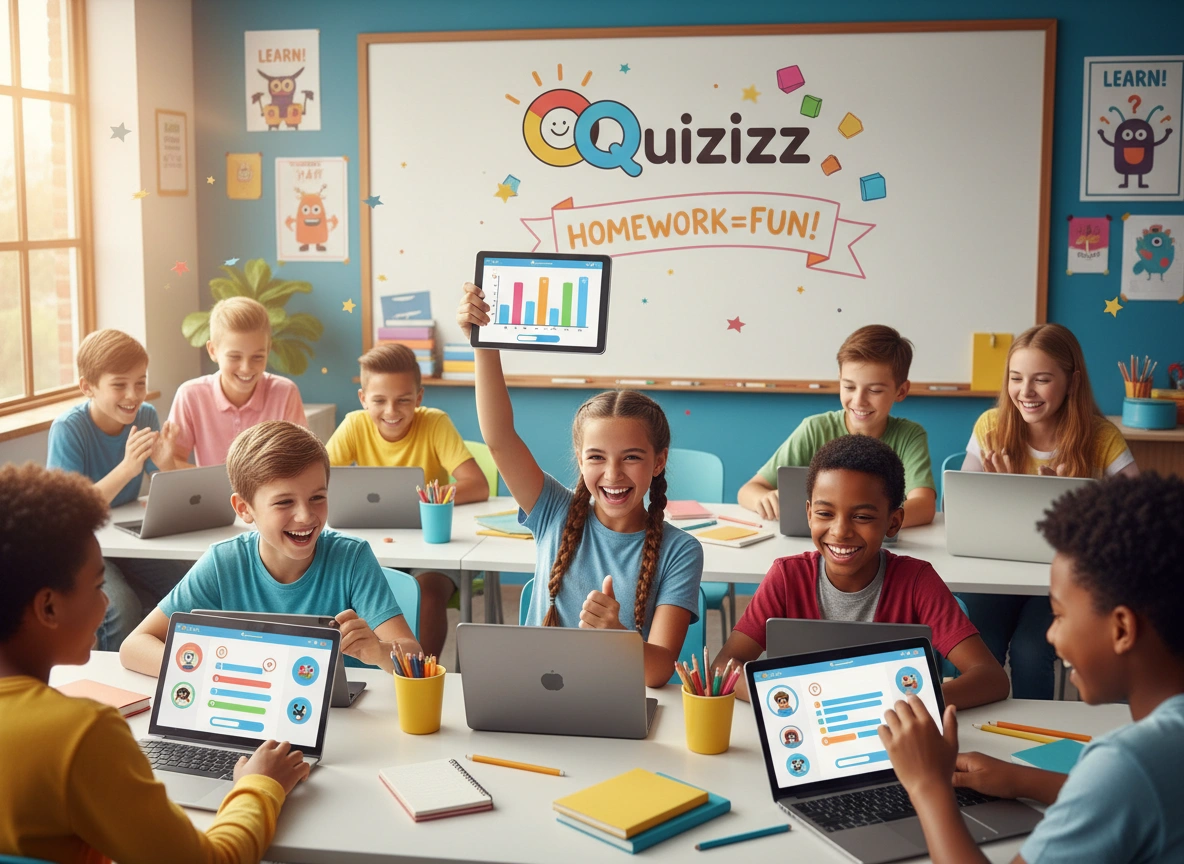
Homework has long been a source of contention in the educational landscape. For decades, the mere mention of the word was enough to elicit groans from students and sighs from parents anticipating a nightly struggle. The traditional model—often characterized by rote memorization, dry worksheets, and solitary textbook reading—frequently failed to ignite curiosity or motivation. However, the digital revolution in education has introduced tools that are fundamentally reshaping this dynamic. Among these, Quizizz stands out as a transformative platform that is redefining the homework experience, turning what was once a chore into an engaging, interactive, and even enjoyable activity.
By leveraging the psychology of gamification and the accessibility of modern technology, Quizizz has created an environment where assessment feels like a game and learning happens almost as a byproduct of play. This article explores the mechanics behind this transformation, examining the features that drive student engagement and the tangible benefits observed in classrooms worldwide.
The Gamification of Learning: Beyond Points and Badges
At its core, Quizizz operates on the principles of gamification, but its implementation goes deeper than superficial rewards. While points, leaderboards, and avatars are part of the ecosystem, the true engagement comes from the platform’s ability to provide immediate feedback and a sense of progress.
Traditional homework often involves a significant delay between execution and feedback. A student might complete a worksheet on Tuesday, hand it in on Wednesday, and receive a grade on Friday. By the time they see their mistakes, the learning moment has passed, and the context is lost. Quizizz dismantles this lag. When students answer a question, they know instantly if they were correct. If they get it wrong, the platform can display the correct answer or an explanation immediately. This instant gratification loop mimics the mechanics of video games, keeping students locked into the “flow” of learning.
Furthermore, the competitive element—while optional—adds a layer of excitement. Students can see their ranking fluctuate in real-time or compare their scores against class averages. For students who might shy away from direct competition, Quizizz offers a mastery mode where the focus is solely on personal improvement, encouraging them to retake quizzes until they achieve a perfect score. This shift from “completing the assignment” to “mastering the level” changes the student’s internal narrative from compliance to achievement.
Innovative Features Transforming the Experience
The success of Quizizz in making homework enjoyable lies in its specific, user-centric features designed to meet students where they are.
1. Self-Paced Learning
One of the most significant stressors in a traditional classroom or timed homework environment is the pressure to keep up with peers. Quizizz allows students to progress through questions at their own pace. In “Homework Mode,” deadlines are set, but the actual completion of the task is flexible. A student can take five seconds on a concept they have mastered and two minutes on a more complex problem without the anxiety of a ticking clock affecting their ability to finish. This autonomy reduces anxiety and allows students to engage with the material more thoughtfully.
2. The Power of Memes and Themes
It might seem trivial to an adult observer, but the inclusion of memes and customizable themes is a stroke of genius for student engagement. After answering a question, students are often greeted with a funny, encouraging, or empathetic meme based on whether their answer was right or wrong. This injects humor into the learning process, breaking the tension of assessment. It signals to the student that this is a safe, relaxed space for learning, not a high-stakes examination hall.
3. Read-Aloud and Accessibility
Inclusivity is crucial for enjoyment. A student struggling with reading comprehension will rarely find traditional text-based homework enjoyable. Quizizz includes built-in read-aloud features that make content accessible to younger learners, English Language Learners (ELLs), and students with specific learning disabilities. By removing the barrier of text decoding, the platform allows these students to focus on the actual content and concepts, enabling them to participate fully and enjoy the feeling of success.
4. Redemption Questions
Failure in traditional homework is often final. If you get question 5 wrong, it stays wrong. Quizizz introduces the concept of “Redemption Questions,” which allows students to revisit questions they answered incorrectly earlier in the session. This reinforces a growth mindset: mistakes are not permanent failures but opportunities for learning. The psychological impact of being given a second chance transforms frustration into determination.
Impact on Motivation and Learning Outcomes
The shift from static worksheets to interactive quizzes has profound effects on motivation. When homework becomes interactive, students are more likely to initiate the work without parental prodding. Teachers report that completion rates for homework assigned via Quizizz are significantly higher than for paper-based assignments.
The platform also leverages the “spacing effect” and “retrieval practice,” two cognitive science principles that boost retention. Because the quizzes are engaging, students are often willing to retake them to improve their scores. This repetition is voluntary, yet it serves as powerful reinforcement. A student might take a vocabulary quiz three times to get on the leaderboard. In doing so, they have engaged with the material three times more than they would have with a standard worksheet.
From a learning outcome perspective, the data generated is invaluable. Teachers receive detailed reports not just on who completed the work, but on exactly where misconceptions lie. If 80% of the class misses a specific question on photosynthesis, the teacher knows exactly what to reteach the next day. This data-driven approach ensures that homework serves its true purpose: to inform instruction and reinforce learning, rather than just generating a grade.
Fostering Collaboration and Connection
While homework is typically a solitary activity, Quizizz has found ways to build community even when students are working from home. The platform allows for “Team Mode,” where students’ individual scores contribute to a group total. This fosters a sense of collective responsibility and collaboration. Students might message each other to discuss difficult questions or celebrate a team victory, turning homework into a social interaction.
Furthermore, teachers can integrate Quizizz with platforms like Google Classroom, Canvas, and Schoology, creating a seamless workflow. This integration means students don’t have to juggle multiple logins or loose papers. The friction of starting the homework is removed, allowing them to get straight to the engaging part.
Real-World Application: A Shift in Perspective
Consider the example of a middle school mathematics class struggling with algebraic equations. Traditionally, the teacher might assign 20 problems from the textbook. The students go home, struggle with the first three, get frustrated, and copy the rest or give up.
Now, imagine the teacher assigns a Quizizz link. The student opens the app on their phone or tablet. Music plays, a colorful interface appears, and they select a fun avatar. They encounter the same algebraic problems, but now the interface is lively. When they make a mistake on the third problem, a funny meme pops up, and they see the correct solution immediately. Later in the quiz, a Redemption Question appears, letting them fix that earlier mistake. They finish the quiz, see they scored 85%, and notice they are only 100 points away from beating their friend’s score. They decide to play again.
In this scenario, the student has done the math. They have practiced the equations. But the emotional context of the activity has shifted from frustration and boredom to engagement and persistence.
Conclusion
Quizizz is not merely a digital substitution for paper homework; it is a re-imagining of how students interact with academic content outside the classroom. By prioritizing user experience, immediate feedback, and the psychological principles of motivation, Quizizz respects the student’s desire for autonomy and mastery.
It transforms homework from a passive requirement into an active, dynamic challenge. As education continues to evolve, tools that can successfully blend rigor with enjoyment will be essential. Quizizz has proven that when learning is designed with the student’s experience in mind, homework doesn’t have to be a battleground—it can be a playground for the mind. Through its innovative features and commitment to engagement, Quizizz is ensuring that for students around the world, the bell ringing at the end of the day doesn’t mark the end of learning, but the beginning of a different, more enjoyable kind of discovery.
